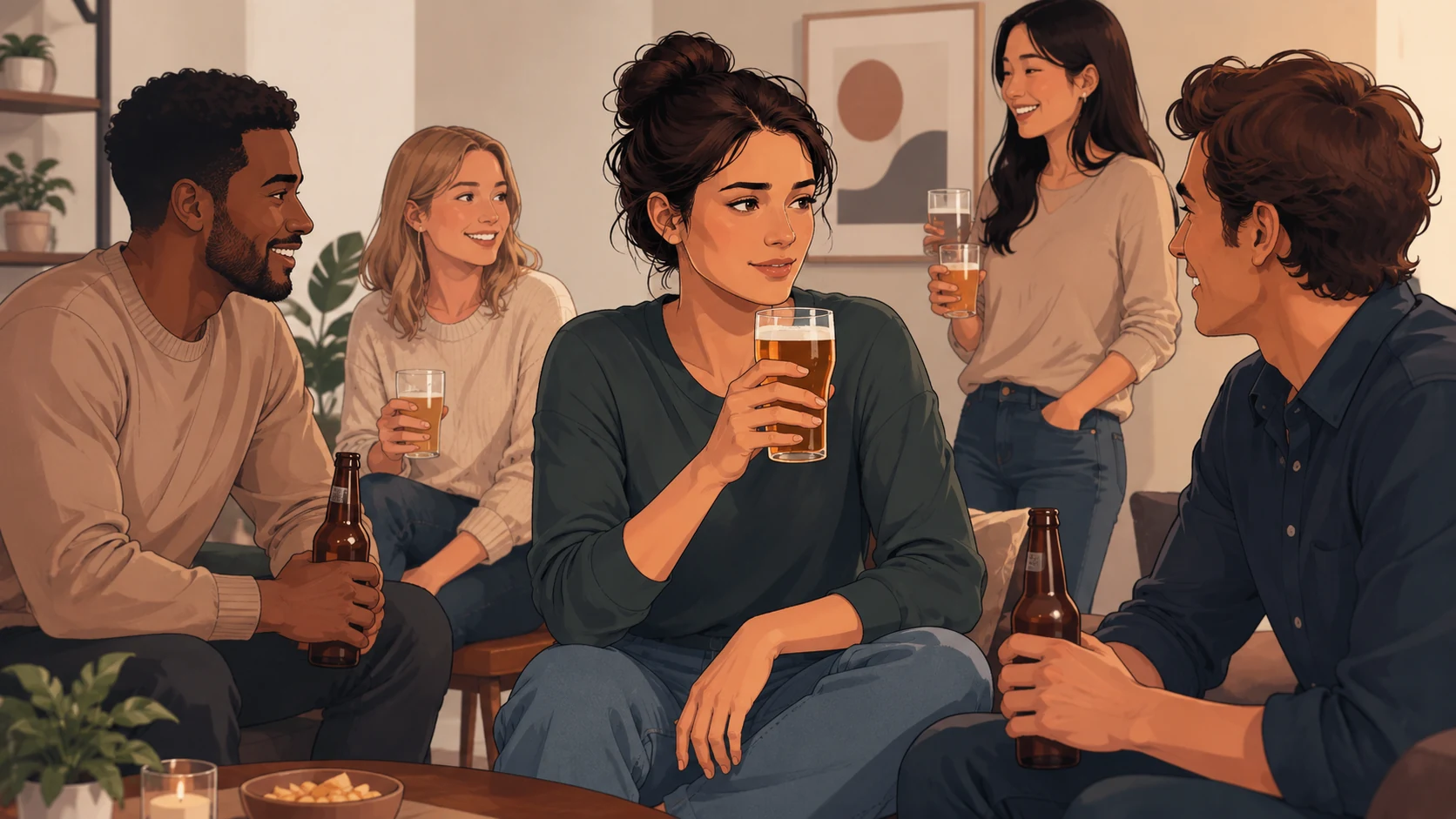
Alcohol occupies an unusual position in society. It affects the brain, can cause dependence and increases the risk of disease and injury, yet it is also present at birthdays, dinners, holidays and work gatherings. Not drinking can attract more questions than drinking.
In 2026, the Health Council of the Netherlands concluded that there is no safe lower threshold for alcohol use. Even one drink carries health risks, while risk increases further as consumption rises (Health Council of the Netherlands, 2026).
This article examines why alcohol is so normalised, what it does to the body and brain, how it affects sleep, stress, training and fat loss, and why enjoyment, relaxation and social connection do not need to depend on a substance.
Contents
Summary
- There is no lower threshold at which all alcohol-related health risk disappears; even low intake increases the risk of several cancers (Health Council of the Netherlands, 2026; World Health Organization, 2025).
- Alcohol is toxic, psychoactive and dependence-producing, and is classified as carcinogenic to humans (IARC, 2025; World Health Organization, 2023).
- Social, enhancement, conformity and coping motives help explain drinking, with coping and enhancement motives more strongly linked to problems (Bresin & Mekawi, 2021; Votaw et al., 2021).
- High doses may shorten sleep onset but disrupt later REM sleep; even low doses may reduce REM sleep (Gardiner et al., 2025).
- Large amounts around resistance exercise can impair anabolic signalling and muscle protein synthesis (Levitt et al., 2022).
Why do people drink?
Alcohol is embedded in social and cultural traditions, so people may begin without making a deliberate decision. The Health Council describes alcohol use as strongly normalised in Dutch society (Health Council of the Netherlands, 2026).
Research commonly distinguishes social, enhancement, conformity and coping motives. Coping and enhancement motives show stronger associations with heavier use and alcohol-related problems (Bresin & Mekawi, 2021; Votaw et al., 2021).
↑ BackWhat is alcohol?
The active alcohol in beer, wine and spirits is ethanol. It is psychoactive, toxic and dependence-producing and affects the brain, liver, cardiovascular and digestive systems (World Health Organization, 2023, 2024).
Alcoholic beverages are classified as carcinogenic to humans. Ethanol itself contributes to cancer risk, regardless of beverage type or price (IARC, 2025; World Health Organization, 2023).
↑ BackIs there a safe amount?
In June 2026, the Health Council concluded that there is no safe lower threshold. There is strong evidence of increased risk for seven cancers at every intake level and insufficient evidence that low intake produces net health gain (Health Council of the Netherlands, 2026).
This does not mean one drink carries the same risk as ten. It means zero has the lowest alcohol-related risk and risk generally increases with amount and frequency (Health Council of the Netherlands, 2026; World Health Organization, 2025).
↑ BackIs red wine good for the heart?
Older observational findings may have been distorted by differences between drinkers and non-drinkers and by including former drinkers in abstaining groups. The Health Council found insufficient evidence that low intake lowers cardiovascular or premature mortality risk (Health Council of the Netherlands, 2026).
Alcohol is therefore not recommended for prevention, and non-drinkers do not need to start for health reasons.
↑ BackWhat happens immediately?
Alcohol depresses the central nervous system. Depending on dose and context, inhibition may decrease while reaction time, coordination, memory and judgement deteriorate (World Health Organization, 2024).
A person may feel freer while having less actual control. Alcohol increases the risk of accidents, violence and injury, including harm to others (Health Council of the Netherlands, 2026; World Health Organization, 2024).
↑ BackAlcohol and stress: numbing is not solving
Drinking to reduce negative emotion is a recognised coping motive and is more strongly associated with alcohol-related problems than purely social drinking (Bresin & Mekawi, 2021; Votaw et al., 2021).
Alcohol may make tension less noticeable for a time, but it does not change workload, conflict, loneliness or uncertainty. Poorer sleep, impulsive decisions and dependence may increase the original burden (World Health Organization, 2024).
Alcohol may temporarily numb the feeling. The problem that produced it usually remains.↑ Back
Alcohol and sleep
A high dose may shorten sleep onset but causes greater REM-sleep disruption later in the night. A recent systematic review found that even a low dose may reduce REM sleep (Gardiner et al., 2025).
Someone may fall asleep quickly and still recover less well. Alcohol is not a recommended sleep aid (Gardiner et al., 2025).
↑ BackMental health and dependence
Alcohol and mental distress influence each other in both directions. People may drink because of anxiety, low mood or stress, while heavy or problematic use can worsen symptoms through sleep disruption, withdrawal, conflict and social consequences (World Health Organization, 2024).
Dependence risk rises with early initiation, frequent or heavy use, coping use, inherited vulnerability and a high-use environment. Warning signs include loss of control, tolerance, continued use despite harm and withdrawal (World Health Organization, 2024).
What does alcohol do to the body?
Alcohol is causally linked to more than 200 diseases and injuries, including liver disease, cancers, cardiovascular problems, neuropsychiatric conditions and accidents (World Health Organization, 2024).
There is strong evidence for at least seven cancers, with risk beginning at low levels and increasing with greater intake (Health Council of the Netherlands, 2026; IARC, 2025; World Health Organization, 2025).
Alcohol and tobacco together strongly increase the risk of several cancers of the mouth, throat and oesophagus (World Health Organization, 2020).
↑ BackAlcohol, resistance exercise and recovery
Effects depend on amount, timing, food, sleep and frequency. Research on large acute doses indicates impairment of mTORC1 signalling and post-exercise muscle protein synthesis (Levitt et al., 2022).
Not every recovery marker changes consistently. A systematic review found heterogeneous and limited evidence, although strength and power recovery may be impaired (Lakićević et al., 2021).
One drink does not erase all muscle growth, but larger amounts can jointly worsen sleep, nutrition, coordination and the next training session (Gardiner et al., 2025; Levitt et al., 2022).
↑ BackAlcohol during fat loss
Alcoholic drinks add energy and are often combined with mixers and snacks. Reduced inhibition, poorer sleep and next-day fatigue may make a planned deficit harder to execute (Gardiner et al., 2025; World Health Organization, 2024).
A drink may fit mathematically within a calorie target, but a successful cut also depends on muscle retention, training quality, sleep and behavioural control.
↑ BackHarm does not stop with the drinker
Alcohol contributes to traffic incidents, aggression, violence and injury, affecting partners, children, friends, colleagues and road users. The Health Council therefore treats it as a broad public-health and safety issue (Health Council of the Netherlands, 2026).
↑ BackReducing or stopping
Every reduction can lower alcohol-related risk, while abstinence gives the lowest risk. An alcohol-free period can reveal triggers, habits and changes in sleep and energy (Health Council of the Netherlands, 2026; IARC, 2025).
Plan in advance, keep alcohol-free alternatives available and seek professional help if control is repeatedly lost. Suspected physical dependence requires medical guidance.
↑ BackYou do not need to numb yourself to live
For me, alcohol is about more than cancer, calories or muscle growth. It is also about how you relate to your body and your life.
I am grateful for the body and life I have been given. I want to treat them carefully, not because perfection is possible, but because I do not want to neglect them deliberately.
I do not believe alcohol is necessary to be social, funny, free or relaxed. It may make a problem less noticeable for a while, but workload, grief, uncertainty or loneliness generally remain when the effect has passed.
I stand for a positive flow: movement, conversation, reflection, prayer, boundaries, asking for help and addressing causes step by step. My criticism is not meant to reject people who drink; respecting the person does not require presenting the substance as better than it is.
“You only live once” means to me that this one life is worth living as clearly and carefully as possible.
↑ BackContinue within Lifestyle
Scientific references
- Bresin, K., & Mekawi, Y. (2021). The “why” of drinking matters: a meta-analysis of the association between drinking motives and drinking outcomes. Alcoholism: Clinical and Experimental Research. PubMed.
- Gardiner, C., et al. (2025). The effect of alcohol on subsequent sleep in healthy adults: a systematic review and meta-analysis. Sleep Medicine Reviews. PubMed.
- Gezondheidsraad. (2026). Alcohol en gezondheid in brede zin. Publicatienr. 2026/11. Advies.
- International Agency for Research on Cancer. (2025). Alcohol: a major preventable cause of cancer. IARC Evidence Summary Brief No. 6. IARC.
- Lakićević, N., et al. (2021). The effects of alcohol consumption on recovery following resistance exercise: a systematic review. Journal of Functional Morphology and Kinesiology. PubMed.
- Levitt, D. E., et al. (2022). Alcohol, resistance exercise, and mTOR pathway signaling: an evidence-based review. Nutrients. PubMed.
- Votaw, V. R., et al. (2021). Motives for substance use in daily life: a systematic review of experience sampling studies. Clinical Psychological Science. PubMed.
- World Health Organization. (2020). Alcohol and cancer in the WHO European Region. WHO Europe.
- World Health Organization. (2023). No level of alcohol consumption is safe for our health. WHO Europe.
- World Health Organization. (2024). Alcohol fact sheet. WHO.
- World Health Organization. (2025). Alcohol and cancer. WHO Europe.
Medical disclaimer
This article provides general education and is not individual medical advice. Do not stop abruptly without medical guidance if physical alcohol dependence may be present.
Does alcohol make you social?
Alcohol may temporarily reduce social tension by lowering inhibition, but it does not build social skill or durable confidence. Repeated reliance can turn alcohol into an increasingly important coping tool (Votaw et al., 2021).
The Health Council found no scientific support for the often-claimed beneficial effect of alcohol on social cohesion at population level (Health Council of the Netherlands, 2026).
↑ Back